african beads for jewelry making
African beads have long played a pivotal role in its cultural history. From decoration to symbols of identity and spirituality, African beads have played an indispensable part in African society. Their rich array of colorful and varied beads reflects centuries-old stories, traditions, and craftsmanship; we explore this exciting realm in depth here by delving into African beads for jewelry making: their cultural significance as well as materials used and artistic techniques employed.
Cultural Significance of African Beads:
Beads have long been an integral part of African culture, each bead type carrying its own symbolic meaning. Beads may be used to indicate social status, age, marital status and even spiritual beliefs in various African societies, and may even be worn during ceremonies, rituals or rites of passage ceremonies.
Beads hold spiritual meaning in many African communities and are believed to possess protective or healing properties. Beaded jewelry is often worn during important life events like weddings, births and initiation ceremonies to symbolize transitions or milestones within an individual's journey.
Bead designs and colors reflect the vibrant tapestry of African cultures, with each community having their own traditions for beadwork. Beads serve as an expressive form of communication - conveying messages about identity, community affiliations and individual experiences to their wearer.
Materials Used in African Bead Production:
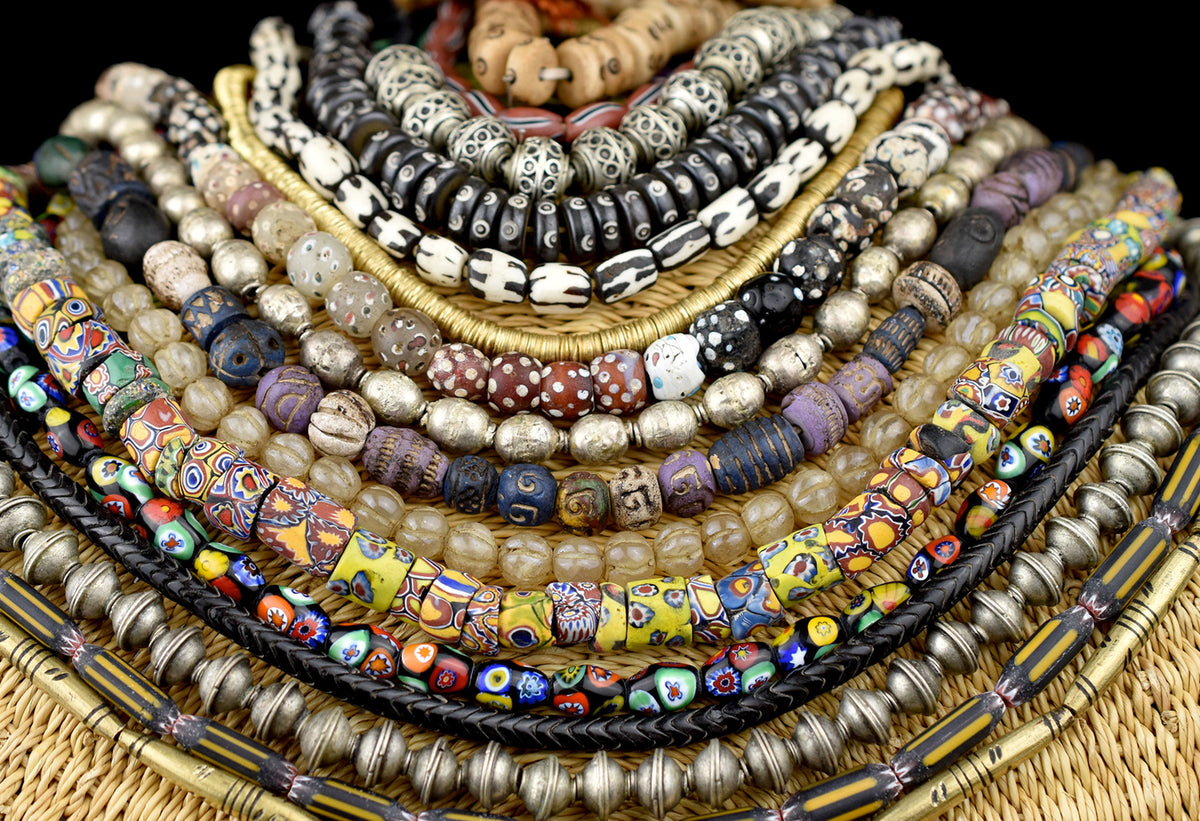
African bead making is a diverse practice that utilizes various materials, reflecting the creativity and resourcefulness of artisans across Africa. Some of the more frequently used beads include:
Glass Beads: Glass beads are an integral component of African bead-making. Available in an assortment of colors and forms, they're often created from recycled glass materials or through complex processes involving melting and shaping processes.
Seed Beads: Seed beads, often small and cylindrical in shape, can be made of various materials like wood, bone or even seeds and strung together to form intricate designs and patterns.
Metal Beads: Metal beads such as brass, copper and aluminum are incredibly popular among African cultures, often being hammered, engraved or cast into various shapes to add character and charm to jewelry designs.
Clay Beads: Crafted from local clay sources and decorated with intricate patterns before firing, these beads display an artist's ability to transform natural elements into works of art.
Bone and Horn Beads: Beads made of bone or horn are both visually appealing and environmentally sustainable, coming from animals previously used as food sources; using these materials in bead production illustrates an holistic approach to resource utilization.
Artistic Techniques in
African Bead Making:
African beads are handcrafted using centuries-old artistic techniques passed down from generation to generation by artisans who transform raw materials into intricate patterns that tell a unique tale. Some of these techniques include:
Stringing and Weaving: Beads can be strung or woven together to form intricate designs and patterns, which requires great precision as well as an understanding of what aesthetic you seek to create.
Knotting: In many African bead traditions, knotting is used to form patterns and secure beads together. Knots may also hold symbolic meaning that add extra significance to jewelry pieces.
Wirework: Metal beads made of brass or copper can be used in wirework to form intricate designs with wire. This technique allows jewelry artisans to craft detailed jewelry pieces with striking visual appeal.
Inlay and Embellishment: Certain beads feature inlay work, whereby smaller beads or materials are embedded into larger ones to create an eye-catching and tactile design element. Enhancement techniques like engraving or painting add further complexity and variety to their designs.
Cultural Diversity of African Beadwork:
African beadwork reflects its vibrant cultural tapestry with its diversity. Different regions and ethnic groups boast distinctive traditions for creating beaded designs infused with distinctive symbols, colors, and patterns that reflect their heritage.
West African Yoruba are widely recognized for their exquisite beadwork, often using glass beads in vibrant hues to craft intricate crowns, necklaces and ceremonial attire from crowns to necklaces and ceremonial attire. Meanwhile, Maasai people of East Africa use brightly-hued beads arranged geometrically as symbols of cultural identity adorning traditional attire as well as jewelry pieces as part of their cultural identity.
Zulu people of South Africa are known for their intricate beadwork, with different colors and patterns representing specific meanings. Zulu beadwork can often be found as part of traditional ceremonies and celebrations to symbolize how tightly knit their community is.
Mali's Dogon people are well known for their symbolic beadwork, where beads are intricately interwoven to form jewelry that holds spiritual meaning for each piece. Each bead represents specific themes related to Dogon cosmology and mythology.
Contemporary Perspectives on African Beads: An Exploration
African beadwork has deep roots in tradition; yet contemporary artisans and designers are adapting it for modern aesthetics to give African jewelry its distinctive visual flair. African bead jewelry has quickly gained international recognition both culturally and visually for its vibrant appeal.
Africa beadwork has inspired designers around the world to incorporate traditional techniques and materials into modern designs, creating jewelry that blends tradition with contemporary style - creating something which serves as a bridge between cultures.
Contemporary African beadwork is also widely admired for its social and economic contributions. Cooperatives and social enterprises offering beadwork opportunities empower local artisans by giving them a platform to showcase their skills on an international stage. Furthermore, increased demand for handmade and culturally significant jewelry has lead to more contemporary African beadwork production and so contributes to maintaining these traditional crafts for future generations.
African beads for jewelry making are more than mere accessories; they represent cultural artifacts which reflect the stories, traditions, and artistic expression of diverse communities across Africa. From vibrant Maasai beadwork to intricate Yoruba crown designs, each bead tells its own tale of identity, spirituality, and heritage.
As we uncover more of African beads, we discover an artform that spans generations. Craftsmanship, symbolism and cultural diversity all play a part in African beadwork's success as an industry and source of inspiration for artisans, designers and enthusiasts worldwide. Wearable for aesthetic reasons or cultural significance alike, African beads create an opulent tapestry linking past to present as well as continent to world.

Comments
Post a Comment